Geological Mapping · mapping-4-35
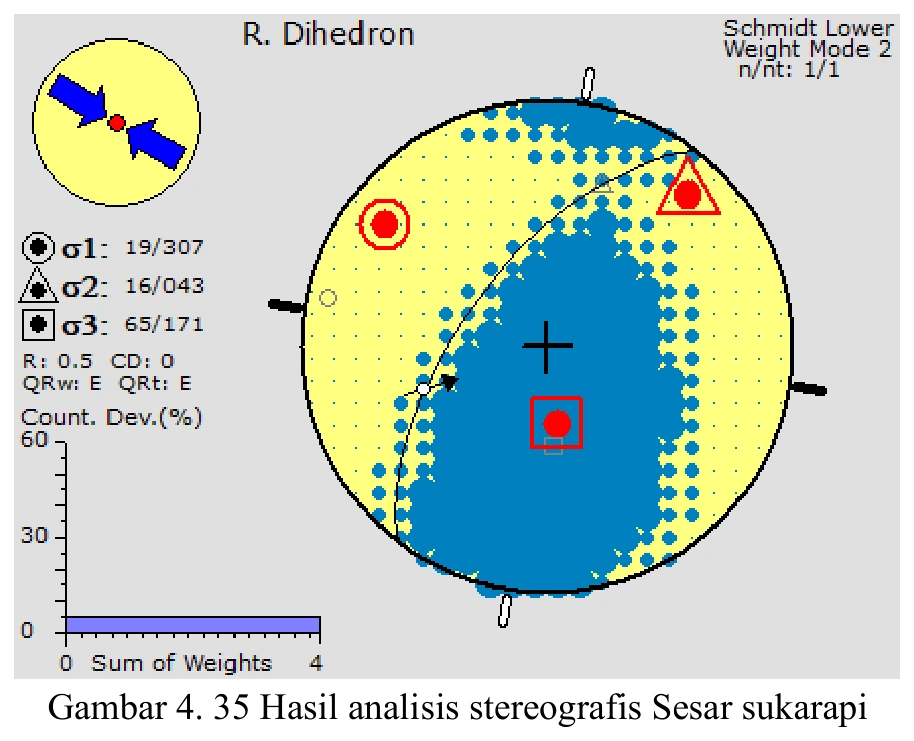
Sukarapi fault stereographic analysis
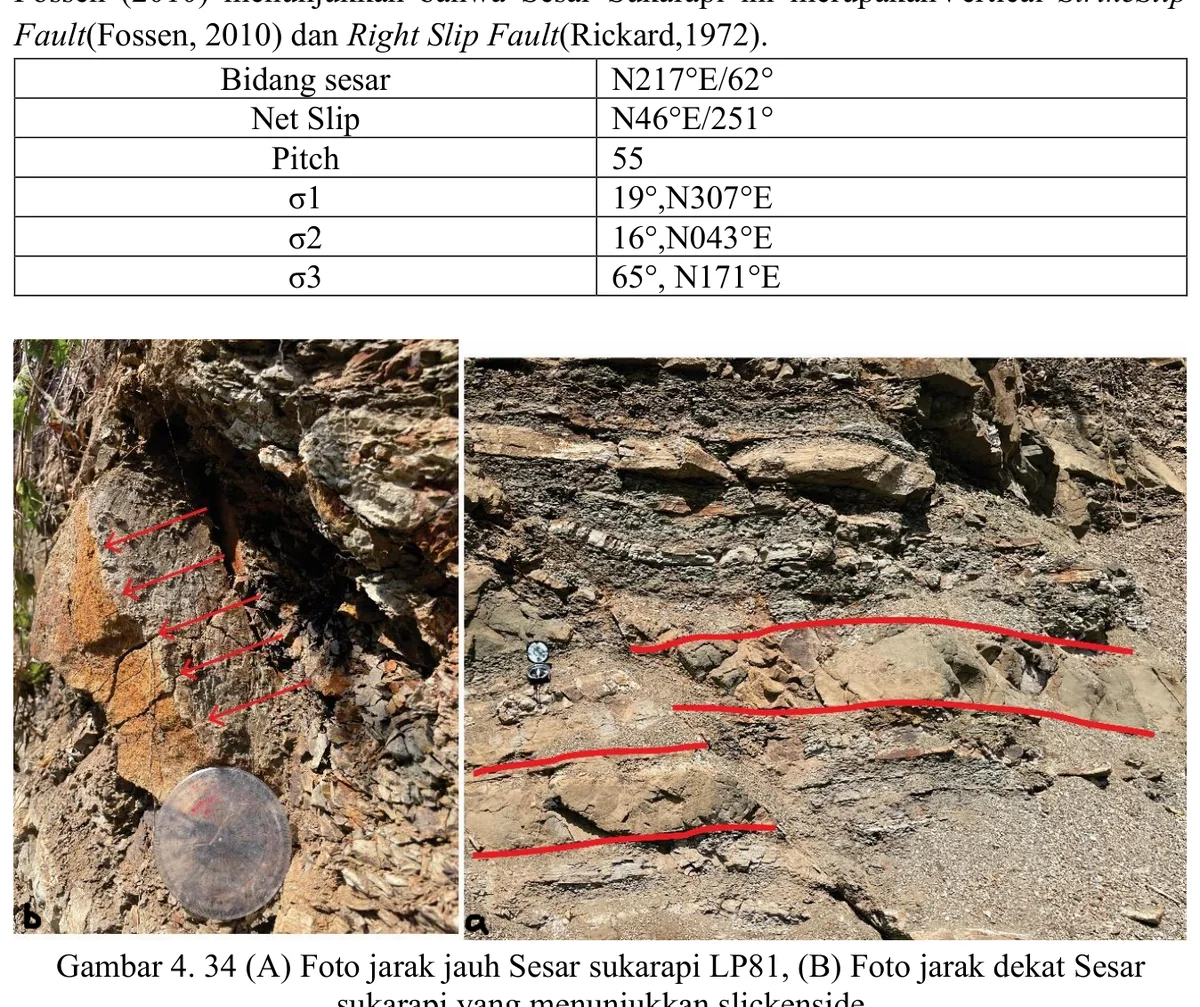
The stereographic solution translates the Sukarapi measurements into a three-dimensional kinematic hypothesis, but the input notation and projection conventions must be auditable. Plane strike/dip, slickenline rake or trend/plunge, lower- versus upper-hemisphere projection and assumed movement sense should be listed explicitly.
SOURCE-LED TECHNICAL READING
Geological interpretation and evidential boundary
The stereographic solution translates the Sukarapi measurements into a three-dimensional kinematic hypothesis, but the input notation and projection conventions must be auditable. Plane strike/dip, slickenline rake or trend/plunge, lower- versus upper-hemisphere projection and assumed movement sense should be listed explicitly. Calling a fault ‘vertical strike-slip’ is inconsistent with a reported dip near 62° unless the term is used broadly; oblique-slip should be considered if the lineation has a substantial dip component. Uncertainty should include measurement dispersion and alternative nodal solutions. The stereonet is valuable as a consistency test between field geometry and regional structure, not as a substitute for shear-sense evidence.
- Source
- Private mapping source vault · geological evidence record
- Location in source
- PDF page 81
- Image quality
- Standard
- Record ID
- mapping-4-35